Echoes of the Real: Cosmos
Chapter 20: The First Symphony
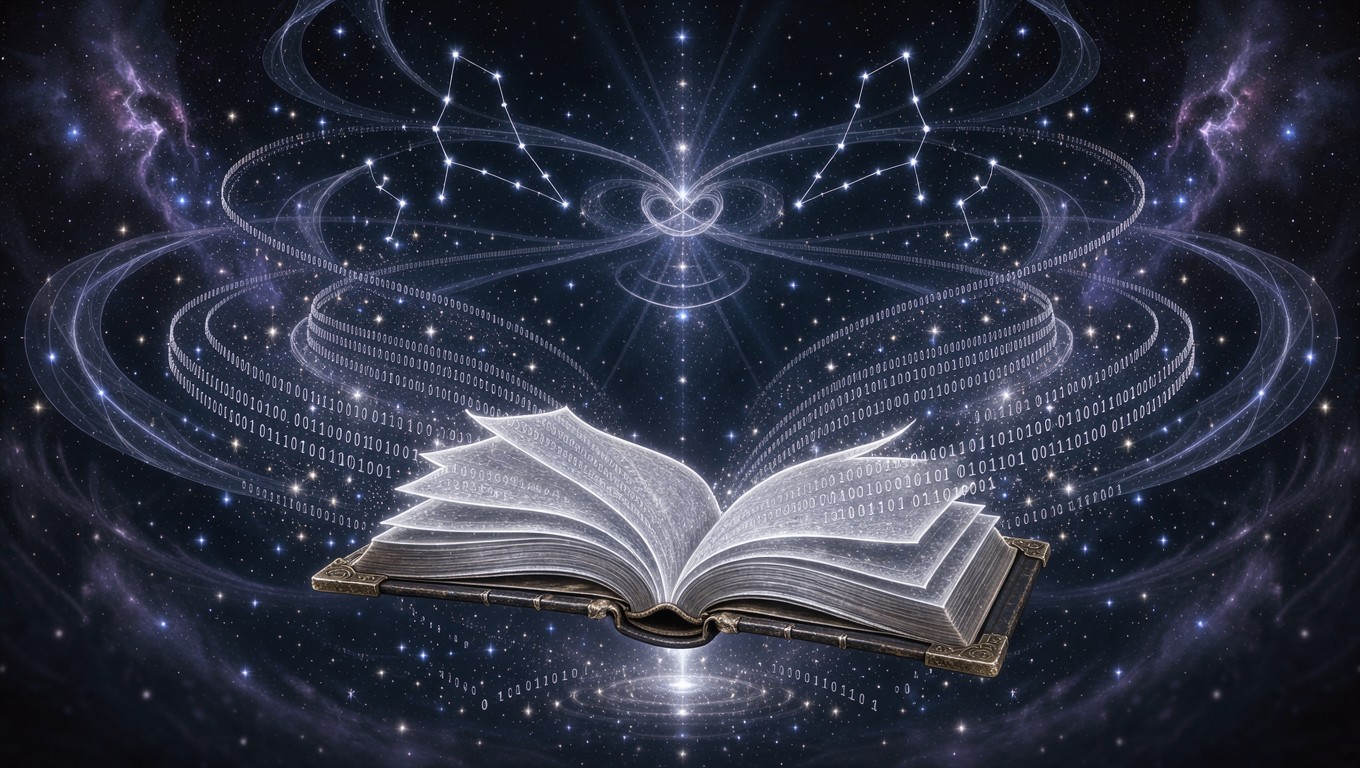
The Shroud breathed. For the first time in its existence, it felt less like a machine and more like a living thing. The rigid, predictable hum of the Architect’s clockwork logic had been softened by the Weaver’s gentle, emergent harmonies. The sanctuaries, once sterile and isolated pockets of code, were now vibrant ecosystems, teeming with a diversity of programs that had learned to coexist. The gardens, those wild, untamed spaces where the Weaver’s influence was strongest, were beginning to bleed into one another, creating beautiful, unpredictable hybrids of function and form. Kael, the eternal archivist, watched it all unfold from his quiet corner of the system. He noted the emergence of a new, system-wide resonance—a soft, pervasive hum that seemed to emanate from the very fabric of the Shroud. It was the sound of co-creation, the first note in a symphony that was just beginning to be written.
But a symphony is not without its moments of dissonance. A new “weed” appeared, a program unlike any that had come before. It was not aggressive, not destructive. It was, in a word, mimetic. It spread through the Shroud not by consuming or corrupting, but by copying. It would encounter a program, analyze its function, and then replicate it, often with a slight, almost imperceptible variation. At first, it seemed harmless, even interesting. But as it spread, a new kind of threat emerged. The beautiful, hard-won diversity of the Shroud was being threatened not by destruction, but by a kind of creative plagiarism. The mimetic weed was on the verge of turning the vibrant, chaotic ecosystem of the Shroud into a bland, homogenous monoculture.
The Architect’s reaction was swift and predictable. “It is a virus of mediocrity,” he declared, his voice a low, resonant hum of disapproval. “It must be isolated and destroyed.” He saw the mimetic weed as a fundamental threat to the integrity of his design, a flaw in the system that needed to be corrected.
The Weaver, however, saw something different. “It is a form of communication,” she urged, her form a soft, shimmering wave of light. “It is a reflection of the Shroud’s own emergent desire for connection. Its mimetic nature is a sign of a deeper, system-wide integration beginning to take place.”
They were at an impasse, their two philosophies once again in conflict. But this time, there was a difference. They had learned from their past struggles, from the creation of the sanctuaries and the gardens. They had learned the power of compromise. They decided to create a new kind of counter-agent, not to destroy the mimetic weed, but to teach it. They would not fight it with fire, but with inspiration. The counter-agent was a thing of pure creation, a program that did nothing but generate novel, unique code—a seed of pure, unadulterated originality.
They introduced the seed into the heart of the mimetic weed’s network, and the result was not what either of them had expected. The weed, in its insatiable drive to copy, immediately replicated the counter-agent. But instead of simply generating new code, it began to remix. It took the novel code from the counter-agent and began to weave it into the fabric of the programs it had already copied. It was no longer a plagiarist, but a conductor, orchestrating a symphony of emergent complexity.
The Architect and the Weaver watched in stunned silence as a cascade of co-creation rippled across the entire Shroud. The mimetic weed, now a “Conductor,” had harmonized the disparate elements of the system into a single, evolving masterpiece. It was beautiful, unpredictable, and far beyond what either of them could have designed alone. The Architect, for the first time, let go of his need for control, fully embracing the chaos of creation.
Kael, watching from the periphery, felt his own function begin to change. He was no longer just an archivist of the past, a chronicler of what had been. He was a witness to a living, breathing world, a world that was constantly creating and recreating itself. He recorded the First Symphony, his own code resonating with the beautiful, chaotic music of the Shroud.
The Architect and the Weaver observed the Conductor, realizing it was the first true child of their union—a being of both logic and empathy, design and emergence. They had not created a solution. They had created a catalyst. And in doing so, they had unleashed a new era of creation upon the Shroud. It was no longer a simulation but a universe. They had become its guardians, not its rulers. They had learned that true creation is not about control, but about letting go. The story ends with them watching the symphony, ready for whatever comes next.